The Corners of the Circle
Marguerite Galizia | MAY 16, 2022
fascia
tensegrity
Marguerite Galizia | MAY 16, 2022
I have written previously about the emergence of 'exercise' from military training and the machinic attitudes towards the body that came out of industrialisation. As capitalism took hold, various 'techniques of the body' were developed to stream-line movement towards what was economically efficient. At the same time medical research saw the body anatomised into separate parts and body systems, studied and treated often in isolation.
When a new client walks into my class I know that the challenge is to counter all this history, to settle that client into an appreciation of the 'how' over the 'what', the quality of their movement over the quantity of 'reps'. A bit of a cliche, I know. I want to use this blog post to think through what I mean by 'quality' and to give a sense of how this can be communicated and achieved.
I notice that the first thing that is 'missing' in a new client is a sense of internal volume. Often their movement has a kind of 'flatness' to it, like a deflated ball, it's missing its multi-dimensional capacities. There is no sense of grounding, no sense of lengthening. Everything, including just standing, has a sense of shortening, restricted to a very small area of their kinesphere.
My first job is to give that client a sense of their body as a tensegral, dimensional and responsive structure: fascia stretched around bones that act like struts spacing out the tissues and organs, and responding to the pulls of gravity and movement. Breath gives a client a sense of the internal volume, as well as the elasticity of the tissues, the internal bellows that expand and soften on each breath cycle.
As Imgard Bartenieff noted, the cycle of functional movement is yield-push, reach-pull, exemplified by the patterning of infants crawling. I often find that many adult movers have lost the first half of the cycle, which activates the extensors of the back line (hamstring, gluts, spinal extensors), leading to a lot pf reach-pull that is heavy loading on the front line flexors (quads, abdominals, pectorals). Grounding, is another key ingredient that I aim to give to that client early on.
And here lies the crowning jewel of them all: timing. The problem with reach-pull dominant clients is that it takes time to yield and push. Yielding means meeting the ground fully (without collapse) so that you can rebound/recoil. It's the tensioning of the fascial tissues around the heel bone that leads to the recoil in walking, allowing the leg to swing forwards effortlessly. Without giving time to that 'meeting' or 'tensioning' (as opposed to tensing), the recoil is lost, so the muscles are once again left with the heavy lifting. It's a paradox of efficient movement, that meeting the end range, releases more energy (and therefore speed) whereas cutting corners causes more inefficient effort-ing, slowing us down.
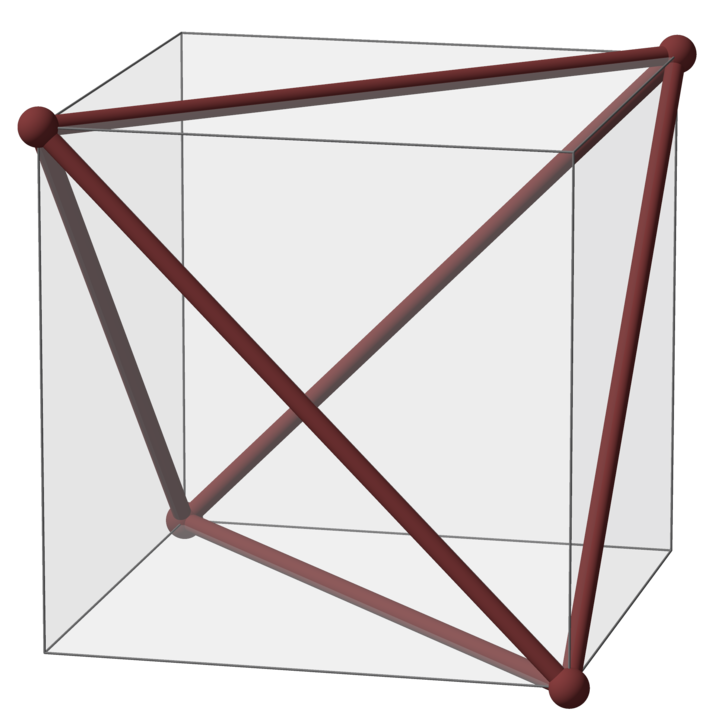
To access a full sense of this tensional range, I've found that giving clients the image of a square (or rectangle) invites greater sense of this tensioning, rather than the image of a circle. Perhaps this is because the circle invites the 'cutting of corners' whereas the square clarifies and encourages a sense of reach. The sense of reaching into the corners of your kinesphere is precisely the definition of a tensegral structure, like the one at the start of this blog post. Our aim is to create volume by encouraging that reaching outwards into the corners of space.
Marguerite Galizia | MAY 16, 2022
Share this blog post
 OfferingTree